Cloud: Unlocking the Secrets of the Digital Sky!
Cloud: Unlocking the Secrets of the Digital Sky!
Estimated reading time: 13 minutes
Key Takeaways
- The digital cloud refers to on-demand delivery of IT resources (servers, storage, databases, networking, software, analytics, intelligence) over the Internet.
- It operates on a pay-as-you-go model, offering significant cost savings and flexibility.
- Key characteristics include on-demand self-service, broad network access, resource pooling, rapid elasticity, and measured service.
- Cloud services are offered in three main models: IaaS (Infrastructure as a Service), PaaS (Platform as a Service), and SaaS (Software as a Service).
- Deployment models include public, private, and hybrid clouds, each suited for different needs.
- The cloud powers much of our daily digital life, from streaming media and online storage to AI and business applications.
Table of Contents
- Cloud: Unlocking the Secrets of the Digital Sky!
- Key Takeaways
- What Exactly is This Magical Digital Cloud?
- The Cloud’s Superpowers: What Makes It So Special?
- Different Ways to Use the Cloud: Like Different Kinds of Toys!
- Where Does the Cloud Live? Different Homes for Digital Dreams!
- Why the Cloud is So Awesome: The Big Benefits!
- How the Cloud is Built: Inside the Digital Engine Room!
- The Cloud in Your Everyday Life: More Than You Think!
- The Magic Behind the Cloud: Special Technologies!
- What Does “The Cloud” Really Mean? A Quick Chat!
- Don’t Forget the Fluffy Clouds!
- The Future is Bright (and Cloudy!)
- Frequently Asked Questions
Have you ever looked up at the sky and wondered about the big, fluffy clouds floating by? They’re beautiful, mysterious, and full of water droplets, right? Well, today, we’re going to talk about a different kind of cloud – one that’s just as mysterious and amazing, but instead of floating in the sky, it powers almost everything we do with computers, phones, and the internet! Get ready to explore the incredible world of the digital cloud, where your favorite games, videos, and even smart artificial intelligence (AI) helpers live!
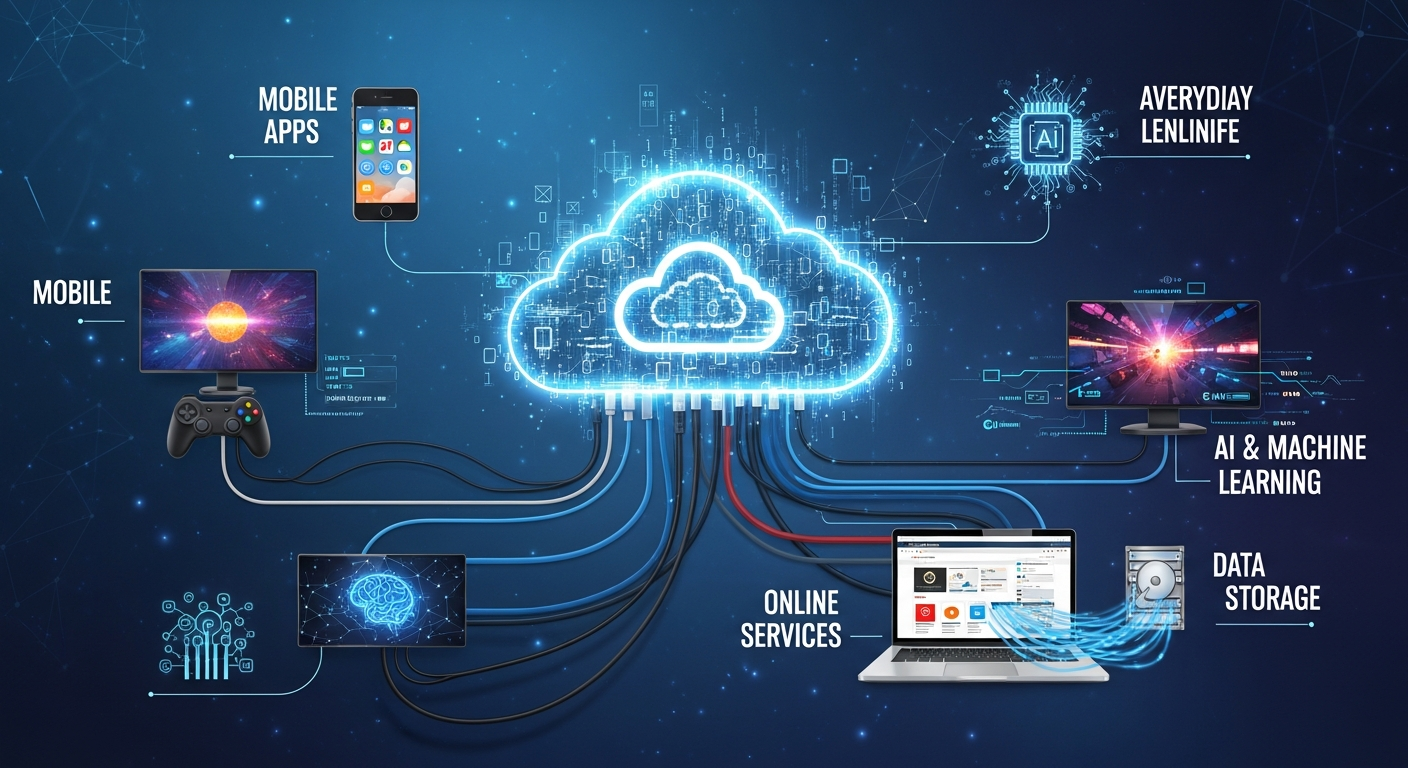
Imagine a world where all your favorite digital things – your games, your movies, your music, even your homework – don’t actually live inside your phone or computer. Instead, they live far away, on giant, super-powerful computers that you can connect to anytime, anywhere, with just an internet connection. That, my friends, is the magic of the cloud! It’s like having a super-secret, never-ending storage box and a lightning-fast brain for all your digital needs, floating invisibly all around us.
This week, we’re diving deep into the cloud, not the kind that brings rain, but the kind that brings us endless digital possibilities. It’s the engine behind so much of our modern world, and understanding it is like peeking behind the curtain of a grand magic show! So, let’s pull back that curtain and see what wonders await us in the digital sky.
What Exactly is This Magical Digital Cloud?
At its heart, cloud computing is a super clever way to deliver computer services over the internet. Think of it like a giant, invisible library or a massive playground filled with computing power. Instead of owning all the books (or all the servers, storage, databases, and software), you just borrow what you need, when you need it.
Here’s the simplest way to understand it: Instead of keeping all your important files and programs on your computer at home, you send them to powerful computers in huge buildings far away. These distant computers are owned by special companies that let you use their power and storage. And the best part? You usually only pay for what you actually use, just like you pay for electricity or water in your home. This means no more needing to buy super expensive computer parts or worry about your own computer breaking down!
The experts at places like Azure, Google Cloud, and Oracle all agree: cloud computing is about getting computing services – like powerful servers, places to store your data, smart software, and even amazing artificial intelligence tools – right over the internet. You don’t have to keep all these big machines at your house or school. They’re out there, in “the cloud,” ready for you to tap into! It’s an “on-demand” service, meaning you get it exactly when you ask for it.
The Cloud’s Superpowers: What Makes It So Special?
The cloud isn’t just a fancy way to store stuff; it has some truly incredible superpowers that make it super useful for everyone, from big companies to kids playing online games. Let’s explore these amazing abilities:
-
On-Demand Self-Service: Your Digital Genie!
Imagine you want to play a new game or use a special app. With the cloud, you don’t need to ask anyone for permission or wait for someone to set it up for you. It’s like having a magical genie that grants your wish instantly! You can just go online, click a few buttons, and poof – the computer power or storage you need is ready to go, all by yourself. The experts at NIST (National Institute of Standards and Technology) and the GSA (General Services Administration) explain that this means users can get what they need without needing a person from the cloud company to help them every single time. It’s fast, easy, and puts you in control!
-
Broad Network Access: Anywhere, Anytime!
This superpower is all about freedom! Have you ever wanted to finish your game or check your email when you’re away from home? With the cloud, you can! Cloud resources are like invisible treasures you can find from anywhere in the world, as long as you have an internet connection. It doesn’t matter if you’re using a phone, a tablet, or a computer. Whether you’re at home, at school, or on vacation, your digital world in the cloud is just a click away. As places like Azure and Cloudflare point out, this broad access means you’re never truly disconnected from your data or applications.
-
Resource Pooling: Sharing is Caring (and Smart!)
Think of a giant swimming pool where many people can swim at the same time. The cloud works similarly, but instead of water, it’s sharing computer power and storage. Many different users and companies share a huge “pool” of computing resources. The cool part is that these resources are given out as needed, so everyone gets a fair share, and no computer power sits around doing nothing. It’s like a super-smart system that knows exactly how much power to give to each person, making sure everyone has what they need without wasting anything. The GSA highlights this clever sharing system as a core feature.
-
Rapid Elasticity: Stretchy and Speedy!
This superpower is like having a super stretchy balloon that can grow big or shrink small in an instant! If lots of people suddenly want to watch a popular new movie online, the cloud can quickly stretch and get bigger to handle all those viewers. And when fewer people are watching, it can shrink back down. This “rapid elasticity” means the cloud can instantly grow or shrink its computing power to match whatever is needed. This is super important for websites that get very busy at certain times, like during a big sale or a major news event. NIST and the GSA both confirm that this ability to scale up or down almost instantly is one of the cloud’s most amazing tricks.
-
Measured Service: Pay for What You Play!
Remember how we said you only pay for what you use? This is the “measured service” superpower. It’s like electricity – you only pay for the lights you turn on, not for all the electricity in the whole power plant! The cloud keeps track of how much storage you use, how much computer power you need, and how much information you send and receive. Then, it bills you based on that usage. This makes it very fair and often cheaper than buying and owning all your own powerful computers, as highlighted by NIST. It’s a “pay-as-you-go” model, meaning no waste and no surprise big bills for things you didn’t even use!
These five superpowers make the cloud a truly revolutionary technology, transforming how we work, play, and learn in the digital age.
Different Ways to Use the Cloud: Like Different Kinds of Toys!
Just like there are different kinds of toys you can play with, there are different ways to use the cloud. These are called “service models,” and they help explain what kind of tools and power you get from the cloud provider.
-
IaaS (Infrastructure as a Service): Building Your Own Digital Lego Castle!
Imagine you love building with Lego bricks. IaaS is like getting a giant box of basic Lego bricks: the floorboards, the walls, the roof pieces. You get the fundamental computing resources – like virtual servers (which are like computers inside other computers), storage space, and network connections. But you get to decide what kind of castle to build, what color it is, and what goes inside. You install your own operating system (like Windows or macOS) and your own applications. The cloud company just gives you the basic building blocks, and you do the rest. NIST, Google Cloud, and Wikipedia all describe IaaS as providing these fundamental resources for users to deploy their own systems. It’s for people who want a lot of control!
-
PaaS (Platform as a Service): Getting a Lego Kit with Instructions!
Now, imagine you get a special Lego kit with instructions, some unique tools, and all the right bricks to build a specific type of spaceship. PaaS is like that! It offers you a ready-made environment with all the development tools and software you need to build and run your own custom apps. You don’t have to worry about the underlying servers or networks (the basic Lego bricks) because the cloud company manages all that for you. You just focus on creating your awesome app! Google Cloud explains PaaS as offering these development tools and environments, freeing you from infrastructure worries.
-
SaaS (Software as a Service): A Fully Built Lego Castle, Ready to Play!
This is the easiest one! Imagine getting a fully built, amazing Lego castle, complete with characters and accessories, ready to play with right out of the box. SaaS is just like that! It delivers ready-to-use applications right over the internet. You don’t have to install anything on your computer, you don’t have to worry about building anything, and you don’t even have to update the software. The cloud company takes care of everything. Think of your email (like Gmail or Outlook), online office tools (like Google Docs or Microsoft 365), or streaming services (like Netflix). You just log in and use them! Google Cloud and Cloudflare both describe SaaS as delivering these ready-to-use applications, fully managed by the provider. It’s the most common way most people use the cloud without even realizing it!
Where Does the Cloud Live? Different Homes for Digital Dreams!
The cloud isn’t just one big place; it can live in different types of “homes” or “neighborhoods.” These are called “deployment models,” and they describe how the cloud infrastructure is set up and who can use it.
-
Public Cloud: A Grand Public Park for Everyone!
Imagine a huge, beautiful public park that anyone can visit and enjoy. That’s like the public cloud! Services are offered over the internet and are shared among many different companies and people. Giant companies like Amazon Web Services (AWS), Microsoft Azure, and Google Cloud are the ones that manage these massive public parks. They handle all the big computers, storage, and networks, and you just rent a little piece of it. It’s usually the most affordable option because many people are sharing the costs. Google Cloud explains that public clouds are managed by third-party providers and shared by many organizations.
-
Private Cloud: Your Own Secret Garden!
Now, imagine your own special backyard garden, just for you and your family. That’s like a private cloud! The cloud infrastructure is used exclusively by just one organization. This means all the powerful computers and storage are dedicated only to that one company. This offers much more control and security, which is very important for businesses that handle super sensitive information. While it might cost more to set up and manage, it gives that organization peace of mind and complete customization. Google Cloud highlights that private clouds are used exclusively by one organization, offering greater control.
-
Hybrid Cloud: The Best of Both Worlds!
What if you could have your own secret garden AND visit the public park whenever you wanted, and even bring things from your garden to the park? That’s what a “hybrid cloud” is! It’s a smart combination of public and private clouds, where data and applications can be shared between them. This gives businesses amazing flexibility. For example, a company might keep its super secret customer information in its private cloud (its secure garden) but use the public cloud (the big park) for less sensitive information or to handle huge spikes in demand, like during a holiday sale. NIST and Google Cloud both point out that hybrid clouds offer flexibility and resilience by combining both types. It’s a very popular choice for businesses that need both security and the ability to scale up quickly.
Why the Cloud is So Awesome: The Big Benefits!
The reasons why so many people and companies are moving to the cloud are crystal clear. It brings a lot of fantastic benefits:
-
Scalability and Flexibility: Growing Like Magic!
This is one of the biggest wins! Remember the “rapid elasticity” superpower? It means the cloud can grow or shrink its computing power and storage to meet demand, almost instantly. Need more space for your games? Poof! Done. Your website suddenly has millions of visitors? Zoom! The cloud expands to handle them. This flexibility saves companies from having to guess how much computer power they’ll need in the future and buying too much or too little.
-
Cost Savings: Saving Your Pennies!
Instead of buying incredibly expensive computers, servers, and storage systems that might sit idle most of the time, the cloud lets you rent them. You pay only for what you use (“measured service”). This “pay-as-you-go” model means companies don’t have to spend a huge amount of money upfront, which is called “capital expenditure,” on hardware. It’s like renting a movie instead of buying the entire cinema!
-
Global Accessibility: Your Digital Passport!
With the cloud, your files, apps, and everything digital are not tied to one physical computer. You can access your applications and data from anywhere in the world, as long as you have an internet connection. This is why you can check your email on your phone, work on a document on your laptop, and then finish it on a computer at school. Azure and Cloudflare emphasize this global access as a major advantage.
-
Disaster Recovery and Improved Collaboration: Staying Safe and Working Together!
Imagine if your computer suddenly broke or all your files disappeared! With the cloud, your data is often backed up and stored in many different places, far away from each other. So, if something bad happens in one place, your data is safe and sound in another. This is called “disaster recovery.” The cloud also makes it super easy for people to work together on projects, even if they are in different cities or countries. They can all access and edit the same documents or projects in real-time. Built In mentions both disaster recovery and improved collaboration as key benefits.
These benefits truly show why the cloud is not just a trend, but a fundamental shift in how we use and think about computing resources. It powers so much of the digital transformation we see around us!
How the Cloud is Built: Inside the Digital Engine Room!
To understand how the cloud works, let’s peek into its “engine room.” It’s made up of several important parts that all work together seamlessly. GeeksforGeeks helps us understand these components:
-
Front End: What You See and Touch!
This is the part of the cloud that you actually interact with. Think of it as the friendly face of the cloud. It includes your web browser (like Chrome or Safari), the apps on your phone, and all the dashboards and websites you use to access cloud services. It’s the “user interface” – what you click, type, and see.
-
Back End: The Super Brains Doing the Work!
This is where the real muscle of the cloud is! Deep inside huge buildings called “data centers” (which are like massive digital libraries), you’ll find thousands and thousands of powerful computers, storage systems, and special software that manages everything. These are the “servers” and the brains that store all the information, run all the programs, and do all the heavy lifting. You don’t see them, but they’re always working hard behind the scenes.
-
Network: The Digital Superhighway!
Connecting the front end (you!) to the back end (the super brains!) is a vast network, which is essentially the internet itself. This network is like a superhighway that carries all the information back and forth at incredible speeds. It allows you to send your requests to the back end and receive information and services back from it. Without this network, the cloud simply wouldn’t exist!
All these parts work together like a perfectly oiled machine, allowing you to seamlessly access and use cloud services without even realizing the complex dance happening behind the scenes.
The Cloud in Your Everyday Life: More Than You Think!
You might not realize it, but the cloud is already a huge part of your daily life! It’s not just for big companies; it’s everywhere you look.
-
Business Software: Your Digital Office!
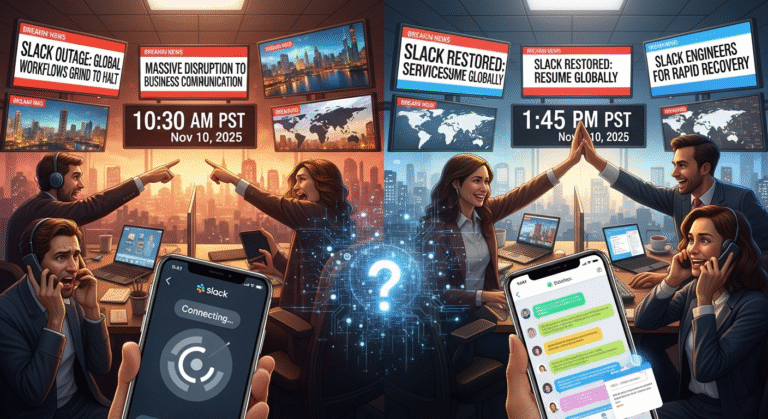
Think about how many people use email services like Gmail or Outlook, or office programs like Google Workspace (Docs, Sheets, Slides) or Microsoft 365 (Word, Excel, PowerPoint). Collaboration tools like Slack also rely heavily on cloud infrastructure. https://aiengineers.in/slack-down-november-10-2025/ All these are often delivered as SaaS, meaning they live in the cloud! Built In and Cloudflare point out that these essential tools are prime examples of cloud use.
-
Media Streaming: Your Entertainment Powerhouse!
Love watching movies on Netflix or YouTube? Or listening to music on Spotify or Apple Music? These amazing services stream their content to you directly from the cloud! Instead of downloading every movie to your device, the cloud sends it to you as you watch, saving space on your phone or computer. Built In specifically mentions Netflix, Hulu, and Spotify as examples.
-
File Storage and Synchronization: Your Always-Safe Digital Backpack!
Ever saved a file to Google Drive, Dropbox, or OneDrive? That’s the cloud in action! These services let you store your important files online, so you can access them from any device, anywhere. And if your computer breaks, your files are still safe in the cloud. Cloudflare highlights these as key examples.
-
Application Hosting: Powering Your Favorite Apps and Games!
Many of your favorite websites, mobile apps, and online games are hosted in the cloud. The cloud provides the virtual servers and powerful resources needed to run these applications smoothly for millions of users at once. Even complex tasks like machine learning workloads, which are a big part of AI, often run on cloud infrastructure because they need so much computing power.
From sharing photos with friends to video calling grandma, from playing online multiplayer games to smart devices that listen to your voice – the cloud is the invisible hero making it all possible. It enables so much innovation across all industries.
The Magic Behind the Cloud: Special Technologies!
So, how do these cloud companies make it all work? They use some very clever technologies:
-
Virtualization: One Computer, Many Minds!
Imagine you have one super powerful computer. Virtualization is a special trick that allows that one powerful computer to act like many smaller, separate computers! It’s like having one big pie but being able to cut it into many slices, and each slice acts like a whole pie on its own. This is how cloud providers can take their big, physical computers and share them out to many different customers, making the most of their resources. Built In highlights virtualization as abstracting computing resources from hardware.
-
Software-Defined Networking (SDN) and Content Delivery Networks (CDNs): Smart Traffic Cops and Super Speedy Delivery!
These are like the smart traffic cops and super-fast delivery services of the internet. Software-defined networking helps manage how information flows through the cloud, making sure it gets to the right place quickly and efficiently. Content delivery networks (CDNs) are like having mini-warehouses of popular information (like videos or website pictures) all over the world. When you want to watch a video, the CDN sends it to you from the closest mini-warehouse, making it load super fast! These technologies enhance efficiency and global access, according to Built In.
What Does “The Cloud” Really Mean? A Quick Chat!
The term “the cloud” can sound a bit mysterious. It actually comes from old network diagrams where engineers would draw a fuzzy cloud shape to represent the internet or a complicated part of the network that they didn’t need to explain in detail. It was a simple way to say, “all that stuff out there.”
But in simple terms, when we talk about “the cloud” in technology, we mean using remote computers – huge groups of servers in those giant data centers – via the internet. It’s the opposite of using resources on your own local computer or the server in your school’s office. It’s like borrowing a big, powerful computer from far away instead of relying only on the one sitting on your desk.
Don’t Forget the Fluffy Clouds!
While we’ve spent all this time talking about the amazing digital cloud, let’s not forget the original “cloud”! The word “cloud” still fundamentally refers to the beautiful, visible masses of tiny water droplets or ice crystals that float in our atmosphere. The technology term “cloud” cleverly uses this idea of something distributed, ever-present, and a bit mysterious to describe its digital counterpart. So next time you see a fluffy cloud in the sky, you can think of both its natural beauty and its digital cousin powering your world!
The Future is Bright (and Cloudy!)
Isn’t it thrilling to think about how much the cloud impacts our lives? From the games we play and the shows we watch to the way businesses operate and how artificial intelligence learns and grows, the cloud is at the very core of our modern world. It’s a testament to human innovation and our constant drive to make technology more accessible, powerful, and useful.
The cloud isn’t just a trend; it’s the foundation for the future of computing. As technology continues to evolve, bringing even more powerful AI and incredible new apps, the cloud will be there, silently and efficiently, making it all possible. So, the next time you connect to your favorite app or stream a movie, remember the incredible digital cloud above and around us, working its magic to bring the future to your fingertips! It’s an exciting time to be alive in this truly digital sky!
Frequently Asked Questions
- What is cloud computing in simple terms?
- What are the main benefits of using the cloud?
- Is the cloud secure?
- What’s the difference between public, private, and hybrid clouds?
- Can I use the cloud for free?
Cloud computing means storing and accessing data and programs over the internet instead of directly on your computer’s hard drive. It’s like renting computing power and storage from a provider (like AWS or Google Cloud) rather than owning all the hardware yourself.
The main benefits include cost savings (you only pay for what you use), increased flexibility and scalability (you can easily increase or decrease resources as needed), global accessibility (access your data from anywhere), and improved disaster recovery due to data backups in multiple locations.
Cloud providers invest heavily in security measures, often more than individual companies can afford. While no system is 100% foolproof, reputable cloud services offer robust security features, encryption, and compliance certifications. Users also have a role in maintaining security through strong passwords and proper configuration.
A public cloud is owned and operated by a third-party cloud service provider and shared among many users over the internet. A private cloud is dedicated exclusively to one organization. A hybrid cloud combines elements of both public and private clouds, allowing data and applications to be shared between them for greater flexibility.
Yes, many cloud services offer free tiers or free trials for basic usage. For example, personal file storage like Google Drive or Dropbox often provides a certain amount of free space. Major cloud providers like AWS, Google Cloud, and Azure also have “Free Tiers” that allow users to experiment with various services up to certain limits without charge. For more advanced or high-volume usage, a paid subscription is typically required.