The Secret Superpower: How AI Finds the Answers YOU Need!
The Secret Superpower: How AI Finds the Answers YOU Need!
Estimated reading time: 6 minutes
Key Takeaways
- AI is an astonishing tool but *you* are crucial in making it work best by asking clear, specific questions.
- Just like a treasure map, a **clear research topic or question** helps AI zoom in on the exact information you need, preventing vague results.
- Guiding AI to the correct “academic field” (e.g., biology, history) helps it search the right “section” of its vast knowledge library.
- Specifying the **intended learning level** (e.g., year 5 student, university scientist) allows AI to tailor its explanations to be “just right” for you.
- Using *specific focus areas or subtopics* lets you “zoom in” for super detailed information on a tiny part of a larger subject.
- AI has a **gigantic brain** capable of researching answers across a vast array of fields, including STEM, Health, Technology, Business, Education, Social Sciences, and Environmental Studies.
Table of contents
- The Secret Superpower: How AI Finds the Answers YOU Need!
- Key Takeaways
- Unlocking AI’s Brain: How Clear Questions Help AI Find the Answers YOU Need!
- The Treasure Map Challenge: Asking the Right Question!
- Finding Your Way in the Giant Library: The Academic Field!
- Just Right For You: The Intended Learning Level!
- Zooming In for Super Details: Specific Focus Areas!
- The AI’s Gigantic Brain: What it CAN Research!
- Your Superpower: Asking the Right Way!
- The Future of Learning is YOU!
- Frequently Asked Questions
Unlocking AI’s Brain: How Clear Questions Help AI Find the Answers YOU Need!
Imagine living in a world filled with amazing machines that can do almost anything! Robots that help us build incredible things, computers that can talk to us, and special programs that can solve puzzles faster than any human. https://aiengineers.in/google-gemini-ai-assistant This is the world of Artificial Intelligence, or AI! Every day, AI is changing our world, making incredible discoveries, and helping us learn more than ever before. It’s like having a team of super-smart friends who know practically everything. But here’s a super cool secret, a thrilling discovery about how these brainy machines work: even the smartest AI needs a little help from us! This week, we’re going on an exciting journey to understand **how AI finds the answers you need**, and you’ll discover that you have a fantastic superpower to help it be even better! It’s all about asking questions in a special, super-clear way. Get ready to peek inside the marvelous mind of AI and learn how you can become an AI master!
The Treasure Map Challenge: Asking the Right Question!
Think about going on a grand adventure, a treasure hunt! If someone just told you, “Find the treasure!”, it would be super hard, right? You wouldn’t know where to start looking! Is it buried in your backyard? Hidden at the bottom of the ocean? Tucked away in a faraway jungle? That’s a bit like what happens if we ask an AI a question that’s not very clear. The AI, with all its amazing brainpower, would feel a little lost, just like you on a vague treasure hunt. https://aiengineers.in/unlocking-n-a-ai-secrets
This is why the very first, most important thing an AI needs is **a clear research topic or question**. It’s like getting a treasure map that says, “Find the golden chest hidden under the tallest palm tree on Coconut Island!” Now that’s a map you can use!
Let’s imagine you want to learn about animals. If you simply type “animals” into an AI, it might give you information about fluffy bunnies, giant whales, tiny ants, or even animals that lived millions of years ago, like dinosaurs! That’s a lot of information, and it might not be what you’re looking for. But if you ask, “How do chameleons change color?”, suddenly, the AI knows exactly what treasure you’re seeking! It can zoom in on chameleons, find out all about their special skin cells, and tell you how they become red, green, or blue! Isn’t that amazing? When you make your question super clear, you give the AI a direct path to the right answer, making its job easier and your learning much more exciting!
Finding Your Way in the Giant Library: The Academic Field!
Now, imagine our super-smart AI is like the biggest library in the entire universe! This library has millions and millions of books, magazines, and videos about everything you can possibly imagine. Just like your school library has different sections – one for storybooks, one for science, one for history – this giant AI library is also organized into huge sections called “academic fields” or “disciplines.”
If you ask the AI a question, but don’t tell it which section of the library to look in, it might search everywhere, which takes a long time and might bring up answers from the wrong place. For example, if you ask “Tell me about stars,” do you mean movie stars or the glowing balls of gas in space? If you tell the AI the **academic field or discipline** you’re interested in, it’s like telling the librarian, “Please take me to the science section to find books about space!”
So, if you’re curious about the planets and outer space, you’d tell the AI you’re looking for answers in “astronomy” or “space science.” If you want to know about how people lived a long, long time ago, you’d tell it “history.” And if you’re wondering how different animals behave, that would be “biology” or “zoology.” By pointing the AI to the right “shelf” in its enormous brain, you help it find the most accurate and interesting information super fast! It’s like having a magic compass that always points to the right kind of knowledge!
Just Right For You: The Intended Learning Level!
Have you ever tried to read a book that was way too hard, with super long words and complicated ideas? Or maybe you picked up a baby book and found it too easy, with not enough exciting details? Learning is best when the information is “just right” for you! Well, guess what? AI also needs to know this! It needs to understand **the intended level** of learning – whether it’s helping a young explorer like you, a high school student, a university student, or even a super-duper scientist with a PhD!
Imagine if you asked an AI about “gravity.” If you’re in year 5, you probably want to know that gravity is the invisible force that pulls things down to Earth, and it’s why apples fall from trees and why you don’t float away into space. But if a university scientist asks about gravity, they might want to know about really tricky equations, theories from Albert Einstein, or how black holes affect gravity! These are very different explanations!
By knowing the “level,” the AI can choose its words carefully, explain things simply or in great detail, and make sure the information is perfect for your brain! It’s like having a personalized teacher who knows exactly how to make learning fun and understandable for you. So, when you ask your AI question, thinking about “Is this for a kid, a teenager, or a grown-up?” can make a huge difference in the amazing answers you get!
Zooming In for Super Details: Specific Focus Areas!
Sometimes, even after you’ve picked a clear topic, a field, and a level, you might want to know about a tiny, super-special part of it. This is where **any specific focus areas or subtopics** come in handy! It’s like when you’re looking at a giant map of the world, and then you zoom in to see just your country, then your state, then your city, and finally, your very own street! The more you zoom in, the more detailed your view becomes.
Let’s say your main topic is “dinosaurs” (a clear topic!). The academic field is “paleontology” (the study of ancient life). The level is “year 5” (just right for you!). Now, if you want to know about just the T-Rex’s teeth, or only how fast a Triceratops could run, those are your “specific focus areas”! Without them, the AI might tell you all about every single type of dinosaur, which is cool, but maybe not what you wanted right now.
By adding a focus area, you’re telling the AI, “Okay, super-smart friend, I know a lot about dinosaurs, but what I really want to know about today is just how they moved their giant bodies!” This makes the AI even more precise, like a super detective finding the exact clue you need. It helps you get to the exciting, specific facts you’re curious about much faster!
The AI’s Gigantic Brain: What it CAN Research!
Now for the truly thrilling part! Our AI friend is not just smart; it knows about almost everything! Imagine having access to hundreds and hundreds of amazing ideas and facts, all ready to be explored. This incredible AI has information spanning so many different parts of knowledge, it’s mind-boggling! It’s like having an explorer’s map that shows all the different continents of knowledge it can journey through.
Here are some of the fantastic worlds of knowledge that AI can dive into to find answers for you:
STEM Fields (Science, Technology, Engineering, and Mathematics):
This is like the ultimate adventure playground for curious minds!
- Biology: The amazing world of living things! From tiny cells to giant blue whales, AI can tell you how plants grow, how animals survive, and how your own body works! Want to know about the fastest bird or the biggest flower? AI has the answers!
- Computer Science: This is all about how computers think and work, including AI itself! How do apps on your tablet work? How do video games come to life? AI knows the secrets behind the digital world.
- Mathematics: The language of numbers and patterns! AI can help you understand tricky math problems, explain amazing shapes, or even show you how math helps us build bridges and predict the weather.
- Data Science: This is like being a super detective with huge amounts of information. AI can look at millions of facts and find hidden patterns, helping us understand big things like what snacks people like best or how many people visit a park.
Health and Medicine:
This field is all about keeping us healthy and strong!
- AI can research how doctors help sick people get better, how our bodies fight off germs, and what healthy foods we should eat. It can tell you about amazing new medicines and how our hearts beat. It’s like having a super-knowledgeable health guru!
Technology and Innovation:
The world of cool gadgets and brand new ideas!
- From super-fast internet to clever robots, AI can tell you about all the incredible new inventions that are changing our lives. It knows about self-driving cars, virtual reality games, and how we can use solar power to light up our homes. It’s a peek into the future!
Business and Economics:
This is about how people make, buy, and sell things!
- AI can help us understand how stores work, how companies create new toys or clothes, and how money moves around the world. It’s like having a guide to the bustling marketplace of ideas and products!
Education:
All about how we learn and teach!
- AI can find out about different schools around the world, how students learn best, and what new tools teachers can use to make lessons even more fun. It’s like having a wise old professor who knows all the best ways to discover new things!
Social Sciences:
This is about how people live together in groups and societies!
- AI can tell you about different cultures, how communities work, why people make certain choices, and how we can all get along better. It’s like having a window into the amazing diversity of human life on Earth!
Environmental Studies:
All about our beautiful planet Earth and how to protect it!
- AI can research how animals live in the wild, how climate change affects our weather, what we can do to stop pollution, and how to keep our forests and oceans healthy. It’s like having a super-powered friend who helps us care for our home!
Isn’t that an incredible list? No matter what you’re curious about, from the smallest bug to the biggest galaxy, AI has information ready for you. Its brain is truly a library of endless wonders!
Your Superpower: Asking the Right Way!
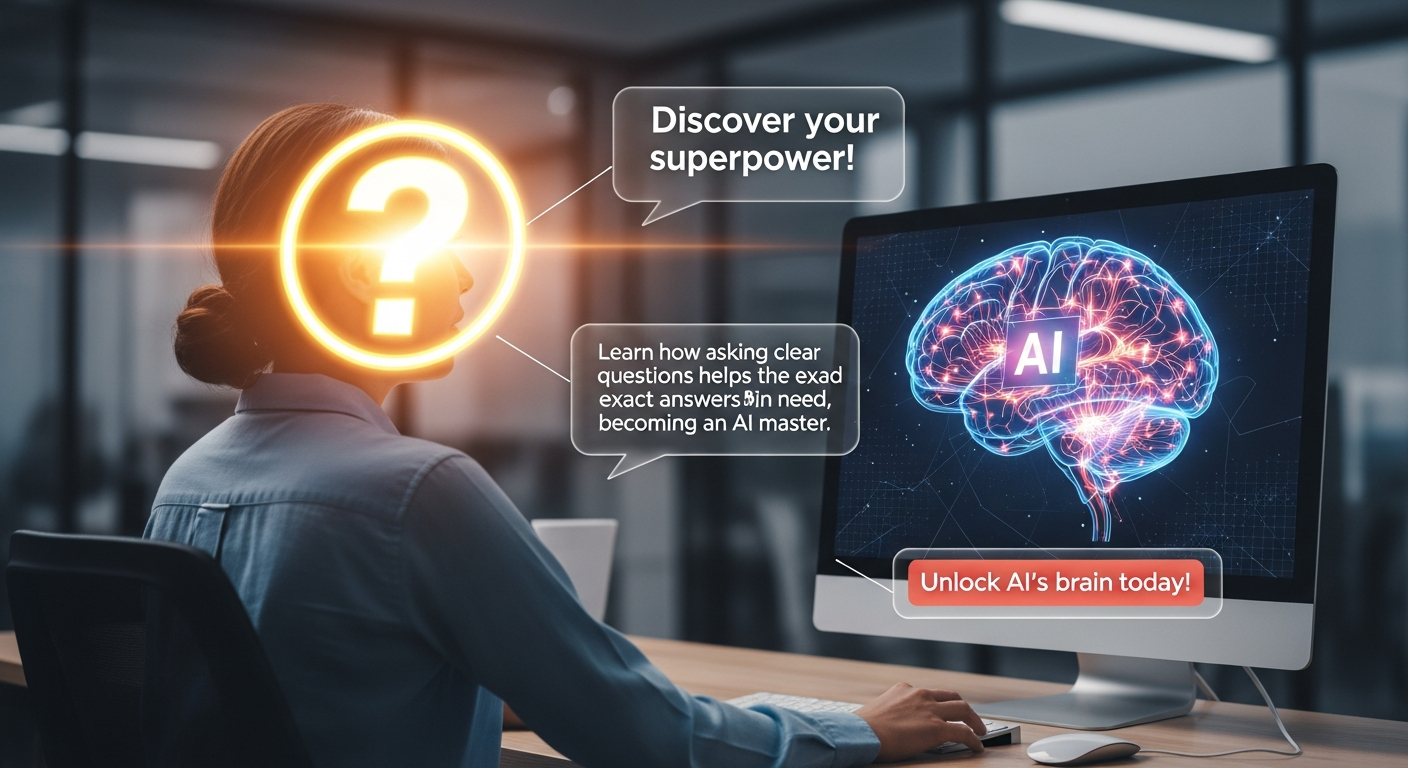
So, what have we discovered on our thrilling journey today? We’ve learned that AI is a truly astonishing tool, a super-brain ready to help us explore, learn, and discover. But the most exciting part is that you play a crucial role in making it work its very best! You have a superpower! By learning to ask clear, specific questions, you become the key that unlocks AI’s full potential.
When you want to learn something new, remember these super-important steps:
- Be Super Clear! Don’t just say “animals,” say “How do penguins stay warm in the snow?”
- Pick the Right Section! If it’s about outer space, mention “science” or “astronomy.”
- Choose Your Level! Think, “Is this for a young explorer or a grown-up scientist?”
- Zoom In! If you want to know about just a specific part, like “the wings of a butterfly,” say so!
By doing this, you’re not just asking a question; you’re giving the AI a perfect map to the treasure of knowledge you seek. You’re helping it provide you with comprehensive information and detailed analysis that is exactly what you need. It’s a fantastic partnership between human curiosity and artificial intelligence!
The Future of Learning is YOU!
The world of AI is growing and changing every single day, bringing new excitement and new possibilities. From helping doctors find cures to amazing new inventions, AI is at the forefront of what’s next. https://aiengineers.in/mind-blowing-ai-news-today And at the heart of it all is the ability to ask questions, to be curious, and to seek answers.
So, go forth, young explorers! Practice your superpower. Ask amazing questions. Be curious about everything. With your clear questions and AI’s incredible brain, there’s no limit to what you can discover. The future of learning is bright, thrilling, and full of endless wonders, and you are a vital part of it! Keep asking, keep exploring, and keep learning! The adventure has just begun!
Frequently Asked Questions
- Q: Why is it important to ask AI clear and specific questions?
A: Asking clear questions is like giving AI a precise map to the information you need. Without clarity, AI might provide a lot of general information that isn’t exactly what you’re looking for, making your learning less efficient and effective.
- Q: What does “academic field” mean when interacting with AI?
A: An “academic field” (or discipline) is like a specific section in a giant library (AI’s brain). Telling AI the field (e.g., “astronomy” for space, “history” for ancient times) helps it narrow its search to the most relevant and accurate information, saving time and improving accuracy.
- Q: How does specifying the “intended learning level” help AI provide better answers?
A: Specifying the learning level (e.g., for a “year 5 student” or a “university scientist”) helps AI tailor its language and detail. It ensures the explanation is “just right” – not too simple, not too complicated – making the information easier to understand and more engaging for your specific needs.
- Q: What kinds of topics can AI research and provide answers on?
A: AI has a vast knowledge base. It can research and provide answers across a wide range of fields, including Science, Technology, Engineering, Mathematics (STEM), Health and Medicine, Business and Economics, Education, Social Sciences, Environmental Studies, and much more!
- Q: What is my “superpower” in making AI work best?
A: Your superpower is the ability to ask clear, specific, and well-structured questions. By defining your topic, academic field, learning level, and specific focus areas, you unlock AI’s full potential and guide it to provide exactly the comprehensive and detailed answers you need.